We speak in fragments.
Declare with commas.
Hope context will save us.
But coherence is a fragile republic.
Each mark—
a small act of rebuilding.
Our discourse has no conjunctions left—
only periods fired like warnings,
and question marks trembling
at the end of slogans.
Meanwhile, the semicolon waits—
a symbol of restraint,
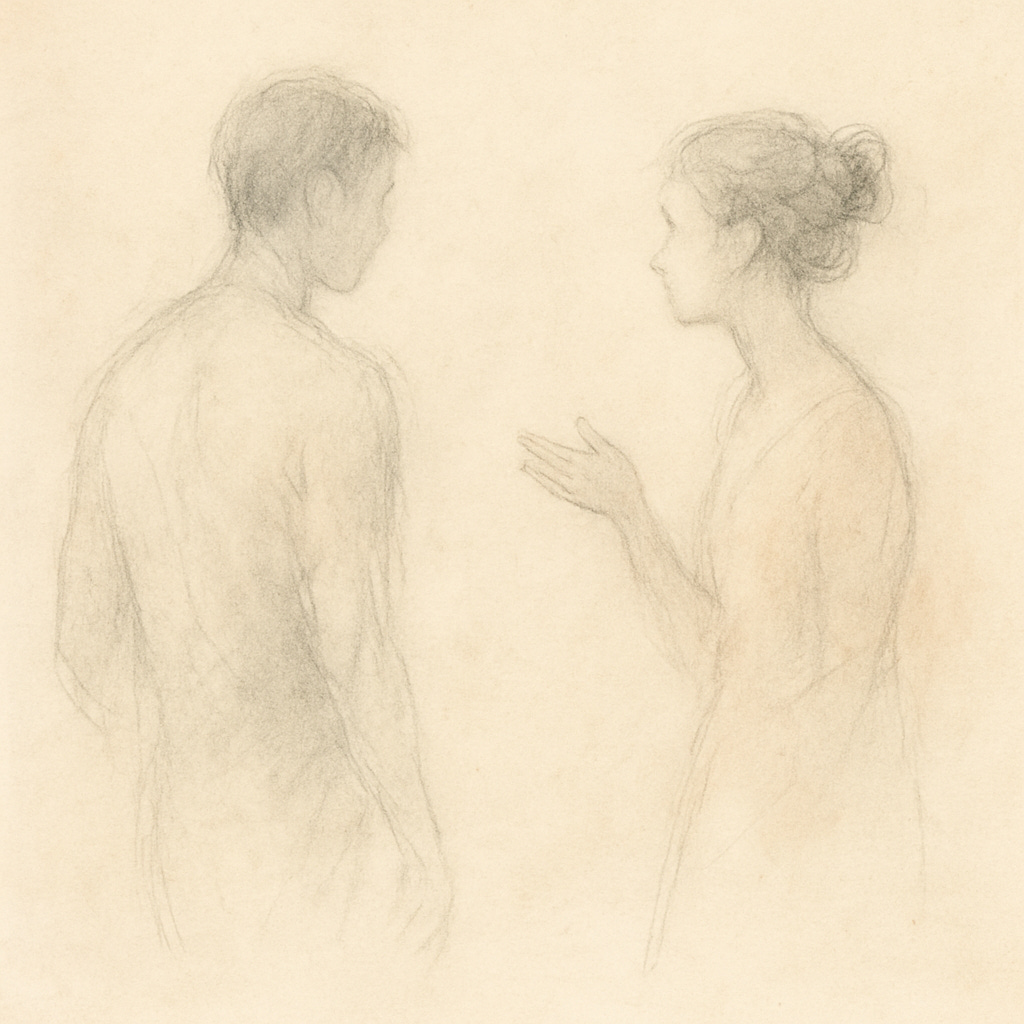
the art of staying connected
without confusion.
If we remembered how to pause,
how to join without devouring,
we might yet rediscover
the sentence of belonging.
But even pauses can wound—
silence mistaken for virtue
when courage was what the sentence required.
Post Note
On language, civility, and the sentence of belonging
Punctuation is the architecture of collective thought. Each mark teaches us how to coexist—how to make space without surrendering clarity. In a fractured age, the semicolon becomes emblem and practice: a way of joining difference without collapse. To punctuate wisely is to rebuild civility from the inside out, restoring coherence where noise once reigned. The world does not need louder voices; it needs better syntax.
You want the complete philosophical arc?
Read in order: Part 1 → Part 2 → Part 3 → Author’s Note → Navigation Guide — then continue with The Sentence That Lets Us Belong.
Explore more:
Home | Archive | About this Publication | FAQs | Copyright & Usage Notice | From Her Journal | Process and Drafts | All Posts in The Notebooks | Series & Collections